What is Movement Therapy?
In the world of high-performance living, people often focus on doing more..
More workouts, more stretching, more effort.
Yet the most profound physical changes often come not from intensity, but from refinement.
What if the key to feeling stronger wasn’t doing more, but moving better?
Movement therapy sessions offer a highly individualized approach to restoring efficiency, ease, and resilience in the body.
The result is a quiet but powerful process of rediscovering how the body is designed to move.
Many clients are surprised by how subtle the work can be—and how profound the results are.
Your body already knows how to move well. Sometimes it just needs the right guidance to remember.
A Sophisticated Approach to Movement
This type of work integrates several advanced therapeutic and movement frameworks, allowing each session to adapt to the unique needs of the individual as a whole.
The approach draws from:
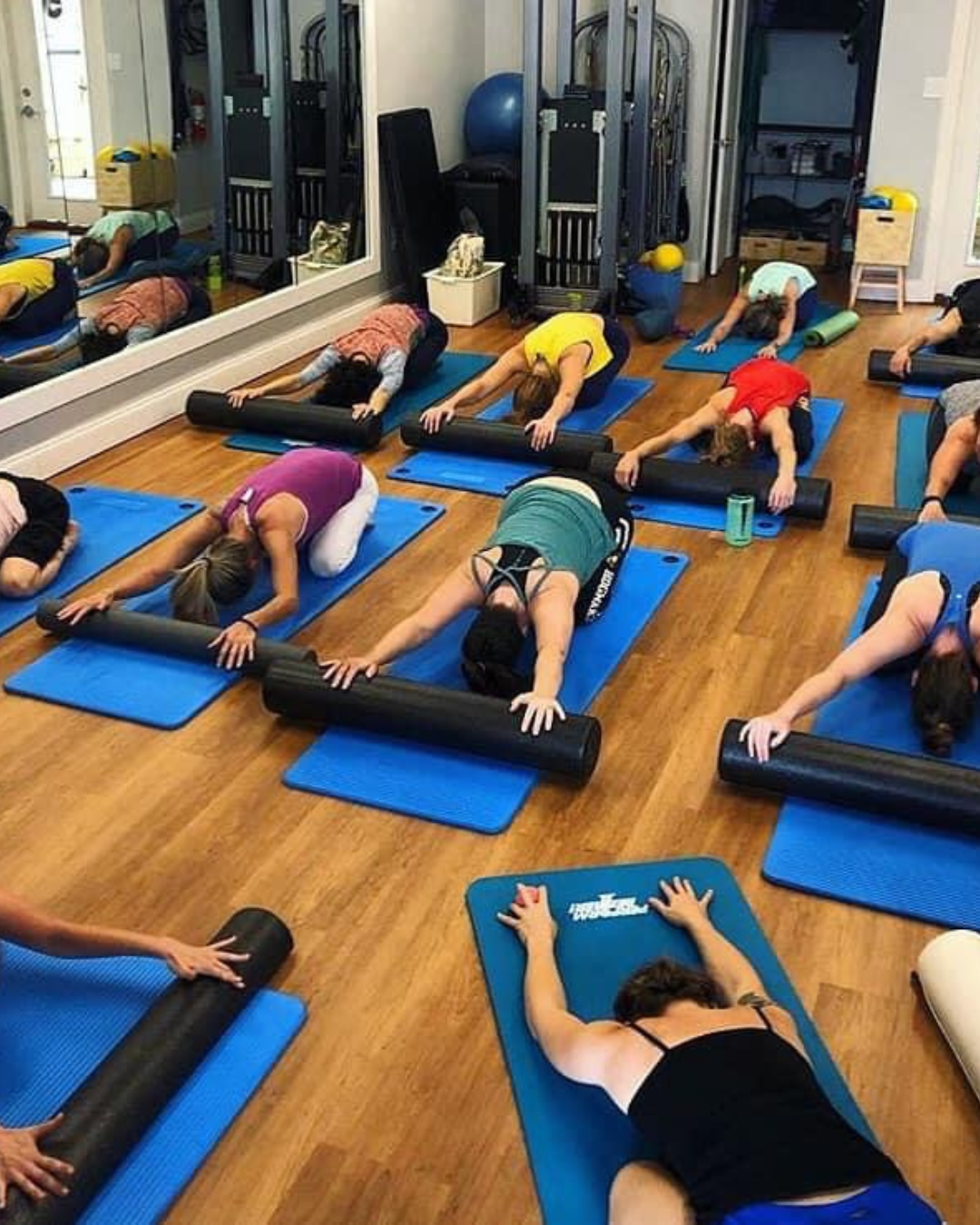
● Pilates-based core integration, coordinating dynamic movement from the soles of the feet to the crown of the head
● Somatic movement learning inspired by Feldenkrais, helping the nervous system discover new movement possibilities
● Fascial movement science, including concepts like Phillip Beach’s Contractile Fields and Dr. Stephen Levin’s Biotensegrity research
● The Thoracic Ring Approach, created by Dr. Linda-Joy Lee, studies of the connection between breath, movement of the ribs and the effect on dynamic full body alignment
● Craniosacral Therapy, which focuses on the connectivity of fluid movement through all the body’s systems, and the body’s innate capacity for self-healing
These elements come together to address the body not as separate parts, but as an interconnected fascial system—one where efficiency, alignment, and breath work in harmony.
Which in turn, thinks of the body as a Dynamic Structure.
This work is deeply informed by the concept of biotensegrity, a structural principle where tension and compression distribute forces throughout a system rather than concentrating stress in individual joints.
When this system functions optimally, you get these four main benefits:
- Movement becomes fluid and coordinated
- Joints experience more space and less compression
- Breathing supports posture and stability
- Strength emerges naturally rather than through force
This work draws from our Movement Therapist, Jeremy Brown’s own biomechanical model, FAKT (Fascintegral Applied Kinematic Theory). This theory helps clients understand how energy travels through the body’s fascial network during movement.
This perspective allows even small adjustments in breath, alignment, or coordination to create meaningful shifts in how the entire body functions.
Designed for Individual Attention
Because of this integrated background, sessions can shift naturally depending on what the body needs that day. Some days may focus more on movement retraining and coordination. Other times, hands-on work may help release restrictions that make movement feel limited or strained.
This flexibility allows each session to support the client’s current goals—whether that means easing chronic tension, improving movement efficiency, recovering from injury, or refining physical performance.
The experience often feels less like exercise and more like a precise recalibration of the body’s internal architecture.
Our greatest satisfaction as practitioners comes from seeing clients apply these insights beyond the studio—while traveling, exercising, or simply moving through daily life.
Over time, many discover that their bodies feel not only stronger, but also more intelligent, adaptable, and resilient.
Because ultimately, the goal of movement therapy is not simply relief from discomfort.
It is the restoration of ease, sophistication, and confidence in the way the body moves through the world.
If this type of work sounds like it would benefit you can book with Jeremy Brown below!